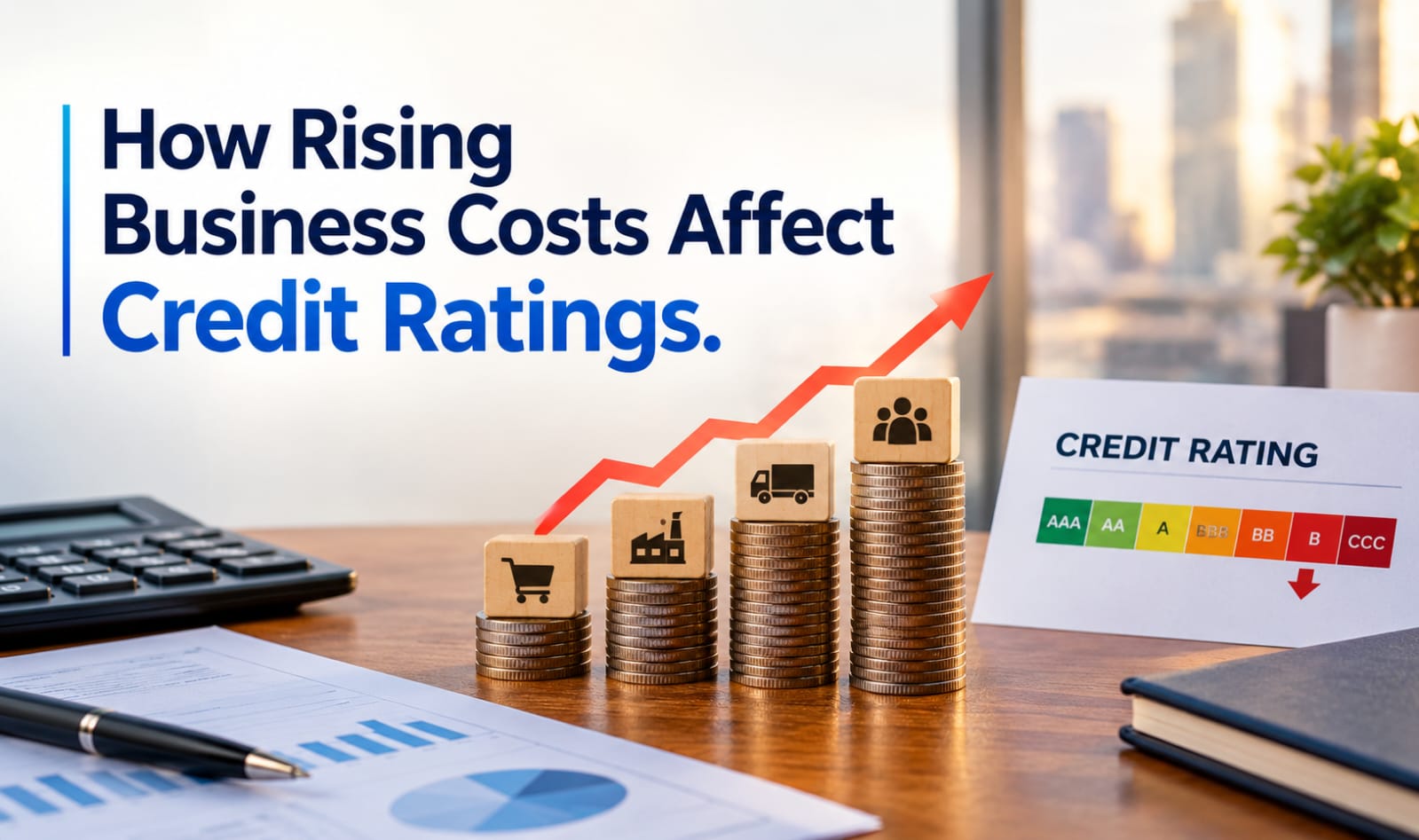
Every business faces changes in operating costs. Higher raw material prices, increased wages, transportation expenses, borrowing costs, and utility bills can put too much pressure on profitability of a company. Some companies can manage these changes through better planning and pricing decisions, whereas others may find it very difficult to maintain their financial performance. Rising costs do not automatically lead to a weaker credit rating.
However, when expenses increase faster than the revenue. A company's cash flow, profitability, and ability to meet financial obligations may come under pressure. Understanding these effects is an important part of credit risk assessment.
Why Operating Costs Matter in Credit Assessment
Operating costs directly affect how much money a business holds from its revenue. If expenses rise very quickly without a corresponding increase in sales then the profit margins may decline. For example , a manufacturing company may experience higher production costs because of expensive raw materials or energy. If it cannot increase selling prices without losing customers, its profitability may weaken.
Credit assessment checks how well a business manages these types of pressures. Companies with stable revenue, efficient operations, and sufficient financial flexibility may be better positioned to take in higher costs than businesses already operating with limited margins.
The Impact on Cash Flow
Profitability and cash flow are closely related to each other, but they are not the same. A business may show continuity in reporting profits while experiencing cash flow pressure because of delayed customer payments, rising inventory costs, or higher operating expenses.
When the cost increases it is obvious that a company needs more working capital to maintain its day-to-day operations. This can reduce the cash available for debt repayments, investment, and other financial obligations.
Cash flow pressure can lower the strength of a company's financial flexibility and increase its dependency on external borrowing.
Rising Costs and Existing Debt
Businesses with considerable debt may be more exposed towards rising operating expenses.
When a large part of revenue is used to cover business costs. Less amount of money may be left to meet interest of expenses and principal repayments. This can become very challenging while borrowing costs also increase at the same time.
Credit assessment considers the relationship between operating performance, cash generation, debt levels, and repayment obligations.
A company with manageable debt and strong cash flow may have good level capacity to oppose increment in costs. In contrast, a highly employed business with limited financial flexibility has a higher chance that it can face a high level of credit risk.
The Importance of Pricing Power
A company's ability to pass higher costs on to customers can affect its financial performance. Businesses operating in markets where customers accept price changes may be able to protect their profit margins. However, companies are facing very tough competition and it may have limited flexibility to increase prices.
If customers reduce their purchases following price increases, the expected improvement in revenue may not materialise. Credit assessment can consider market competition, customer demand, supplier relationships, and the company's position within its industry while evaluating the effect of rising costs.
The Role of ICRA Credit Rating Agency
ICRA Credit Rating Agency can provide an independent assessment of creditworthiness by considering financial related and non-financial related factors. When a company is getting evaluated points like credit profile, factors like profitability, cash flow, debt obligations, level of liquidity, condition of the industry, and management practices can help in explaining how the business will respond to changing operating costs.
Their value depends on the company's financial position, ability to adapt, and capacity to meet its obligations. An independent credit assessment can help investors to develop a clear and good understanding of these factors while evaluating financial risk.
Conclusion
A raise in business costs can easily affect things like profitability, cash flow, debt repayment capacity, and overall financial stability. However, the effect may vary depending on how effectively a company manages its expenses, maintains its margins, and adapts to changing market conditions. Businesses that monitor costs regularly, plan their cash flow systematically, and manage debt carefully may be better positioned to withstand financial pressure.
For lenders, investors, and other stakeholders, understanding the relationship between operating costs and credit risk gives a clearer and more complete vision about a company's financial position in the market. Through independent credit assessment, ICRA Credit Rating Agency can help investors to have a better understanding of the factors that influence the creditworthiness and financial flexibility of a company.