The Truth About Credit Ratings: Debunking Popular Myths From influencing borrowing costs to investment decisions, credit ratings have many more benefits for individuals and various entities including lenders, financial institutions, investors, and more. When it comes to credit ratings, it provides a comprehensive evaluation of an entity’s financial profile along with a measurement of its credit risk. Creditworthiness is an indicator of the ability to repay and the potential risk of default. With the multitudinous benefits of credit ratings, they also come with a lot of common myths and misconceptions that can affect your understanding and decision-making. Here Are the Common Credit Rating Misconceptions- Credit Ratings are Permanent – These ratings of an entity are not fixed and keep changing since they are based on the financial performance of an entity. Certain factors can also affect the credit rating of an entity like shifts in industry trends or economic conditions. An upgrade in rating is experienced by those companies that are consistent in meeting their financial obligations and in a similar way downgrades can be experienced by those companies who face sudden downturns or any financial mismanagement. Personal Credit Scores and Credit Ratings are the Same – Personal credit scores are done to evaluate an individual financial profile which includes their credit utilization, payment history, and length of credit history which impacts their credit scores that range from 300 to 850. Contrary to this credit rating is assigned to financial institutions which gives us in-depth insights into their financial and risk profile further fostering better decision-making for stakeholders. Credit Rating is Just a Number – Credit ratings are more than just a number as they embody a wide range of factors and are an analysis of financial indicators. Higher ratings such as AAA are an indicator of low risk or default which is one of the reasons why such rated entities are so favorable to investors. Credit Ratings Can’t be Improved – Credit ratings are not fixed and can be improved with timely payments, diversification of credit types, and maintenance of a low credit utilization ratio. For businesses to enhance their credit ratings, transparency in their financial reporting and maintenance of a strong operational track record are recommended since they are crucial for elevating credit ratings. With better financial habits and practices an elevated performance and improvement can be seen over time. At ICRA, We Support Your Business’s Global Ambitions ICRA, a pillar of trust and reliability, offers tailored credit rating services to help businesses navigate the intricacies of the financial world with confidence. This tailored approach provided by ICRA lets us address your specific business needs to meet the requirements. The team of experts at ICRA with their deep understanding of various sectors help you expand your business into new markets with multiple opportunities. With extensive knowledge of domestic and international markets, analysts at ICRA help your business to understand the local regulations in a better manner and minimize any potential risks by fostering smooth operations thereby providing you with transparent insights and clear guidance you need for your business. For more info Visit here: www.icrallc.com

Category: Uncategorized
ICRA’s Tailored Credit Solutions: Driving Success Across Sectors

ICRA’s Tailored Credit Solutions: Driving Success Across Sectors When it comes to Credit Ratings, it is crucial to understand their true nature, what factors are considered when calculating, and how and which factors influence them. With multitudinous benefits that are provided with credit ratings, it is necessary to understand the overall risks associated with an entity and how you can leverage these benefits. Demystifying Credit Ratings ICRA Credit Rating at its core measures the risk associated with an entity or individual by providing an in-depth evaluation of an entity or individual further giving us insights into their creditworthiness and overall risk profile. The importance of ICRA’s credit rating besides being an indicator of financial health also affects overall be it personal loan approvals or investment decisions. Beyond this, it also measures how likely a borrower is to repay a debt in time. The type of ratings that are expressed as letter grades such as AAA, AA, A, and so on, varying from high to low can impact the overall potential opportunities or even create barriers since it all depends on the credit rating. Seeking to expand your business into new markets or secure financing on better terms, look no further because ICRA ratings give you the comprehensive analysis that you need for a clear pathway and better decision-making. Why Your Credit Rating Matters Higher credit rating is a gateway to better loan accessibility with an indication of low chance of risk since lenders rely mainly on these ratings to evaluate the risk of lending and with this it opens more opportunities for favorable terms. Negotiating power is increased with borrowers who have a higher credit rating when it comes to discussing loan terms with lenders. Investment decisions are shaped better with in-depth insights into an entity or individual financial profile. An entity with a strong credit ratings i.e. AAA or AA) have a better chance of attracting investors since the investment risk associated with higher-rated entities is lower further instilling confidence in investor’s decisions. Interest rates are directly influenced by credit ratings and with a strong rating the interest rate is lower since the risk of any potential loss is minimal. The reassurance a low-risk profile provides allows these investors to give loans at a favorable rate. The role played by credit rating in determining the interest rates across various sectors whether it is personal loans or corporate bonds. Ready to Grow? ICRA’s Credit Ratings Open New Opportunities. Experts at ICRA provide industry-specific insights from technology to finance to agriculture to help you gain accurate and reliable information within your sector. Leverage the benefits of ICRA ratings with a better understanding into the market dynamics, local economics and regulatory environment to expand your global footprint. The tailored service allows you to address the company’s unique needs to meet your specific requirements. With ICRA, navigation through the challenging dynamics becomes easy thereby ensuring smooth operations and helping you minimize any potential risks. The clarity and confidence you need is offered to you by ICRA with their extensive knowledge of domestic and international financial spheres, guiding you to better cross-border investments. For more info Visit here: www.icrallc.com
Build Trust and Expand Opportunities with ICRA’s Corporate Ratings

Build Trust and Expand Opportunities with ICRA’s Corporate Ratings Corporate ratings by ICRA serve as an indispensable tool for various stakeholders including investors, lenders, and business partners. The analysis of a company’s financial performance provided by ICRA corporate ratings helps investors make well-informed decisions since they rely majorly on this information. Financial metrics of the company such as balance sheet, cash flow, debt levels, and profitability through which a clear and concise picture of a company’s ability to meet its financial obligations along with how it manages financial risks is evaluated through corporate ratings. Not just the financial metrics but qualitative factors that include corporate governance along with competitiveness in the industry and how the effectiveness is the management team is also elevated gives a better profile of a company in all aspects. However, companies must maintain a strong rating which not only enhances their reputation but also plays a role in improving their ability to raise funds at reasonable interest rates. Further, a strong rating is a reflection of the company’s capability of meeting short and long-term financial commitments thereby showcasing it as a reliable entity. A clear reflection of a company’s financial understanding with a strong rating allows it to have better negotiation terms and this gives the confidence that the stakeholders require. Corporate Ratings Key Benefits Unveiled Well-informed Decisions in terms of business are taken when engaging with different stakeholders thereby gathering insights into their perspectives too which can further enhance the reputation of a company showcasing that a company addresses the concerns of its stakeholders. This not only boosts confidence but also builds trust between the two parties and fosters loyalty. A strong rating is an indication that a company is reliable and credible by showcasing its ability to meet financial obligations along with its financial stability. This way corporates get perceived as less risky and investors and stakeholders gain confidence in dealing with such entities that have a reputation of being credible giving peace of mind to the stakeholders regarding their investment. A company with higher corporate ratings improves access to capital markets further expanding doors for new and better opportunities in the global arena. By posing a low risk of default it assures the potential investors of a company’s financial stability, making it an attractive choice in front of the investors for future investments. Not only this but with strong corporate ratings it allows companies to secure loans at lower interest rates further gaining access to capital by reducing the overall cost of financing. Unlock New Horizons with ICRA’s Corporate Ratings In the world of finance, companies must elevate their business to new heights and with ICRA corporate ratings, leverage the benefits by gaining a chance to open doors to new opportunities with access to better capital and attracting potential investors. Gain a strong rating and navigate through complex dynamics of finance with enhanced credibility and reliability through transparent insights. With ICRA’s corporate ratings make better decisions and a strategic plan to enhance your risk management effectively. For more info Visit here: www.icrallc.com
Driving Stability, Transparency, and Growth with ICRA Bank Ratings
Driving Stability, Transparency, and Growth with ICRA Bank Ratings It is crucial to understand the world of finance and navigate it with ease and confidence. The financial complexities are found at every phase with risks lurking at every corner of the economic landscape. ICRA bank ratings let you dive deep into institutions that hold our trust. ICRA bank ratings involve going beyond balance sheets comprehending the ability of a bank to face financial pressures and maintaining operational integrity with time. An in-depth evaluation is provided by ICRA which enables you to get a clear picture of the overall financial health and performance of banking institutions with their bank ratings. Bank ratings are done to assess a variety of factors like a bank’s liquidity, asset quality, management effectiveness, and capital adequacy to get a reflection of a bank’s current standing. These insights are necessary since they assist in making well-informed decisions be it for investors, regulators, or even customers. This sense of security is provided by ensuring that their financial institution is reliable and robust. Key Benefits of ICRA Bank Ratings Informed Decision Making An evaluation can be done with bank ratings for inventors to assess the risk and return profile regarding potential investments. Indicators like asset quality, profitability, and even capital adequacy are analyzed which helps provide a clear understanding of a bank’s financial profile and health. Understanding the overall profile and performance of a bank is very crucial since it assists in identifying institutions that align with risk tolerance and investment objectives thereby helping make informed decisions for investors. Improved Access to Capital Banks that are highly rated are likely to benefit a lot in terms of access to capital. Since these high-rated institutions are often viewed as less risky they gain improved access to capital markets with favorable borrowing terms. A bank’s reputation is enhanced with a strong rating thereby attracting more business partners and customers with elevated trust and confidence. Market Stability and Transparency The disparity in a bank’s performance or even risk profile can lead to inefficient decision-making where misjudgment can occur in terms of evaluating the true value or risk of a financial institution for either investors, regulators, or even customers. Transparent ratings provided by ICRA help investors and customers sustain trust and confidence leading to better investment with less risks of any misunderstandings fostering well-defined decision making. Strategic Benchmarking and Performance Improvement Banks get to improve their areas of weakness since comprehensive evaluation also highlights areas that require attention and areas of strength. A clear understanding of a bank’s performance is gained against the industry competitors and with this benchmarking a competitive edge is provided. With this, it encourages the banks to adopt the best practices which helps them to stay ahead of the competition. Elevating Growth and Stability with ICRA Bank Ratings ICRA holds a strong commitment when it comes to providing ratings that are accurate and transparent. With a thorough understanding of the banking sector, experts at ICRA ensure that they offer you the clarity and confidence that is needed to navigate the complexities with assurance and precision. Serving as a cornerstone of trust and stability, bank ratings provide you with insights into a bank’s ability to navigate future challenges and opportunities. For more info Visit here: www.icrallc.com
Beyond Numbers: The Impact of ESG Factors on Credit Ratings
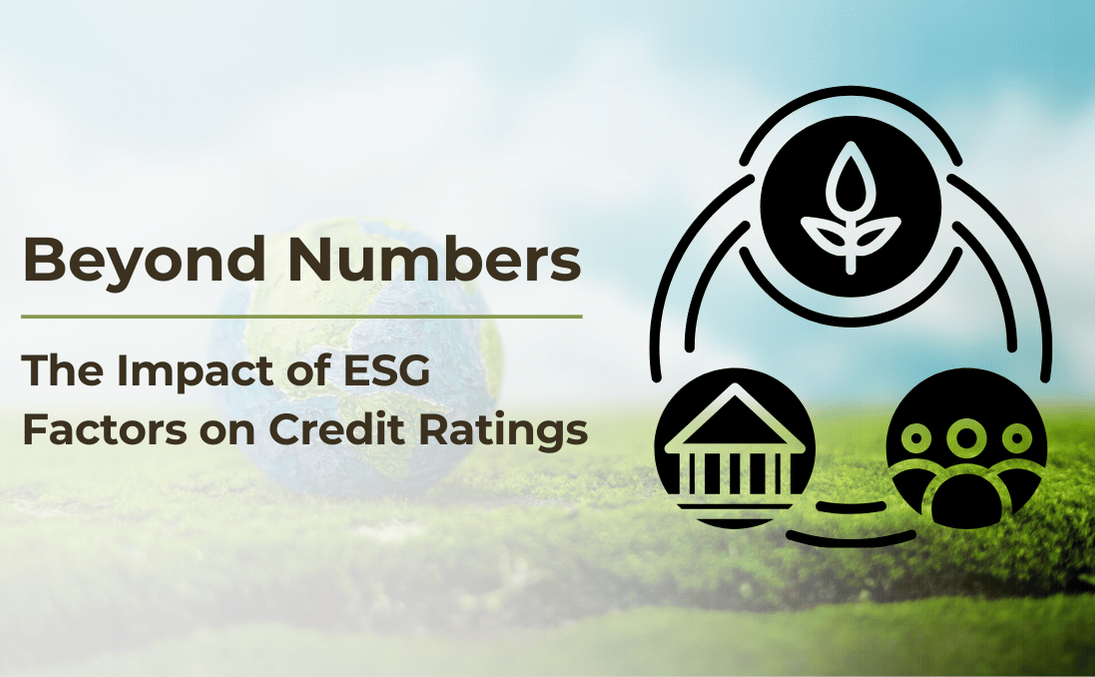
Beyond Numbers: The Impact of ESG Factors on Credit Ratings Credit ratings are done to provide an in-depth evaluation of the creditworthiness of several entities along with an assessment of their risk profile. Credit ratings act as a major assistance in providing investors with accurate and reliable information so that they can make well-informed decisions regarding their investments. These ratings not only impact the decisions involved in lending and investing but they also help in mitigating any potential risk. Why ICRA Credit Ratings? ICRA is committed to providing ratings that are reliable and transparent further serving as a benchmark for accurate and quality credit ratings. With uncertainty in every step of the financial arena, credit ratings play a vital role in helping investors and stakeholders navigate the intricate dynamics of financial markets with paramount trust and confidence. Credit ratings are a reflection of an issuer’s ability to meet their financial commitments within a provided period. A comprehensive evaluation is done based on several variables such as financial performance, Industry outlook, and management quality. Not only this but a strong credit rating opens doors for multiple opportunities in the market and attracts potential investors by unbolting confidence and trust thereby helping you maintain a position in the industry. Role of ICRA ESG factors in credit ratings – With advancements in the financial industry, the role of ESG factors is not overlooked but has gained immense importance in today’s time. The focus is not just on financial metrics for recent years but also on a broader profile of risk and performance of a company with the integration of other criteria through ESG factors. ESG factors are yet to gain a better understanding and their importance is likely to grow since investors look for businesses that value and practice sustainability. Environmental Consideration – With this it becomes clear regarding a company’s sustainability and their efforts to operate sustainably with evaluation across various areas ranging from carbon footprint to resource management. The impact of companies on the natural world becomes transparent with these factors. Those companies are perceived as less risky and have strategic environmental policies. On the other hand, companies with poorly planned strategies and environmental practices have a higher chance of dealing with higher costs which can further affect their creditworthiness. Social Factors – This factor focuses on evaluating a company’s relationship with the broader community in order in which it operates to promote ethical practices and foster a positive environment. Superior employee retention with strong brand loyalty is seen in companies prioritizing social responsibility and being further perceived as lower risk. Social factors are taken into account so that safe working conditions are implemented and fair labor is practiced to promote the healthy well-being of the employees. Governance Evaluation – The effectiveness and quality of a company’s leadership and management practices are done with this evaluation. A good credit rating is acclaimed with strong governance practices that assist in reducing the risk of fraud, mismanagement in the company, and other regulatory penalties. A reflection of the company’s independent board and its stakeholder’s rights demonstrates their transparency and accountability while managing their operations. Transform Your Credit Ratings with ICRA The emerging role of ICRA ESG ratings cannot be overlooked since it marks a significant shift towards evaluating financial risk and performance. A holistic approach is a reflection of a company’s financial profile and its commitment to engage in sustainable and ethical practices. For more info Visit here: www.icrallc.com
The Rising Influence of ESG in Credit Ratings: Everything You Need to Know

The Rising Influence of ESG in Credit Ratings: Everything You Need to Know Sustainability and ethical practices have become an essential element of a company’s growth in the long term. The evaluation in today’s landscape is not just based on the financial profile of the company but also on the management of ESG risks. ESG – Environmental, Social, and Governance Ratings play an important role in assessing a company’s sustainable and environmental initiatives along with its social practices. With ICRA ESG ratings, companies elevate their reputation and attract potential investment that aligns with their sustainability practices. Investors and stakeholders have a clear picture of a company’s overall performance, along with its sustainability and ethical outcomes. ESG ratings also drive investors towards sustainability by managing potential risks associated with it through well-defined decision-making processes. This impact of ESG ratings is not just on the environment but also encourages companies to strive for sustainability and adopt ethical practices further fostering responsible investment. How ESG ratings are evaluated A comprehensive evaluation of a company’s profile and performance is done across all three aspects to give it an ESG rating. A specific metric is used to assess environmental sustainability, social responsibility, and governance practices. Let us take a look at how these criteria are taken into account- Environmental Evaluation – This is a reflection of impact on the environment by the company along with a demonstration of their efforts to operate sustainably. The evaluation is done across various areas with a key focus on carbon emissions and climate change mitigation, energy efficiency, resource management, and environmental compliance. The data is further used from various sources to give a score to each of the factors thereby reflecting the commitment of the company towards sustainability and responsible environmental practices. Social Evaluation – With a focus on a company’s relationship management with its employees, customers, and the broader community. This evaluation is done to promote better ethical practices and foster positive societal impact. The assessment is done on labor practices and employee well-being, human rights, customer relations, and community engagement. This is required to ensure that safe working conditions along with fair labor practices are implemented for the well-being of the employees along with the prevention of unethical practices such as child labor and exploitation. Governance Evaluation – A key aspect of governance evaluation is that it examines a company’s leadership along with its decision-making process while making sure of its adherence to ethical standards. It reflects a company’s balanced independent board, its respect for accordance with shareholder rights, and its transparency and accountability while managing its operations. Governance evaluation is held to give a clear picture of ethical principles that are supported by the company. ESG Ratings by ICRA ICRA ESG Ratings provide a benchmark for evaluating value and sustainability in the long term by providing an in-depth analysis of a company’s ESG aspects. In a world where financial metrics are given more importance, the role of ESG ratings can’t be overlooked as they promote responsible business practices. For more info Visit here: www.icrallc.com
ICRA Scorecard Unveiled: Your Comprehensive Tool for Business Assessment
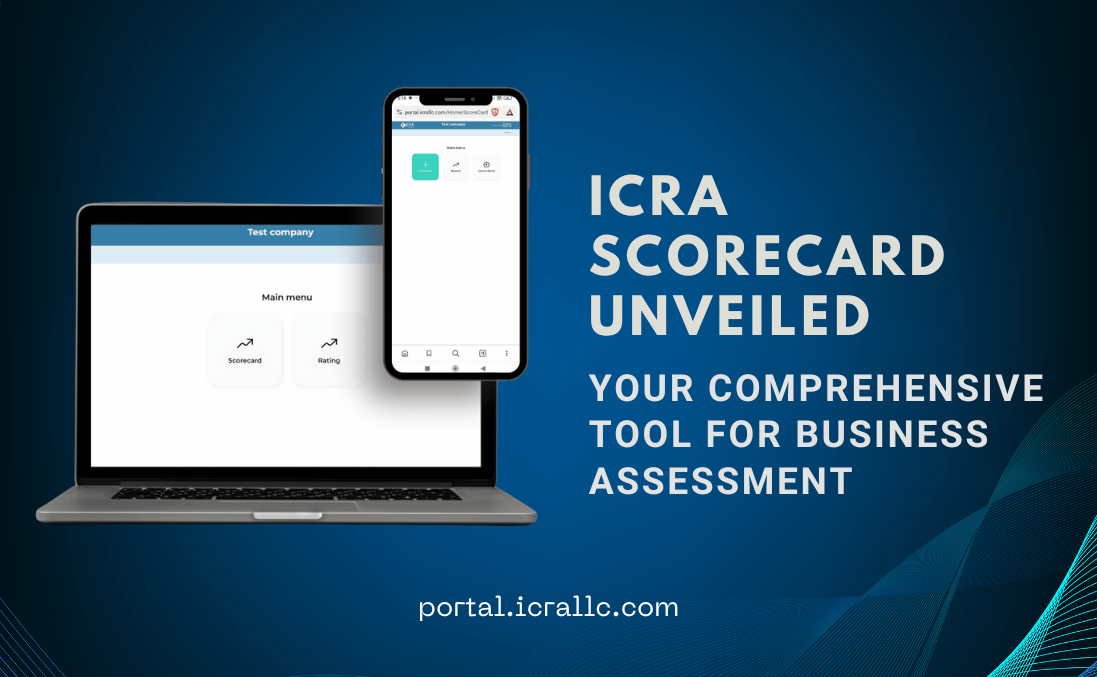
ICRA Scorecard Unveiled: Your Comprehensive Tool for Business Assessment ICRA Scorecard is an indispensable tool that is free of charge and lets investors leverage its benefits by evaluating their financial performance. A prime benefit of the scorecard provided by ICRA is that complex information is distilled into a structured and understandable format. Investors and stakeholders can make well-defined financial decisions by understanding the credit risk associated with an entity through a comprehensive report presented by the ICRA Scorecard. In today’s dynamics, understanding and managing credit risk has become crucial to fostering growth and maintaining financial stability. By leveraging the benefits of the ICRA Scorecard, one can evaluate their business creditworthiness and elevate their financial standing in the industry. The ICRA scorecard delivers a standardized framework for evaluating and assigning credit ratings, which is based on several factors such as financial performance, industry dynamics, and macroeconomic trends. Benefits of ICRA Scorecard An enormous influence of the ICRA Scorecard can be seen on the financial market as investors and stakeholders rely heavily on these financial insights. Since the ICRA Scorecard provides a transparent and accurate creditworthiness of the entities it lets investors get a clear understanding of the entity’s overall performance. Insights such as cash flow, debt levels, and revenue are helpful since they guide investors into making well-defined investment decisions by assessing the overall financial profile of the entity. Loans are easy to secure with the demonstration of creditworthiness since investors are most likely to engage with investors that offer transparent credit assessments. The overall performance of the businesses can be elevated with the insights provided by the ICRA scorecard as it lets them improve their areas of strengths and weaknesses. This enables them to attract potential investments and also differentiate themselves from the competitors in the industry. The use of robust methodology and metrics helps in ensuring that a standard level of rating is done further opening new doors for better opportunities. ICRA Scorecard lets you be in the eye of the investors with the showcase of credibility that helps you gain better access to funding at reasonable rates further elevating your reputation in the market through a strong credit rating. With a higher rating, negotiation is done better as it is a significance of reliability and credibility with an unlikely run for any risk of default or non-payment. ICRA Scorecard: Your Performance Benchmark ICRA scorecard empowers your business with elevated growth and embraces your full potential by enhancing your financial stability. The navigation in the financial arena becomes easy with the stimulation of informed decision making thereby seizing new opportunities with utmost confidence. A clear picture of your position in the market is offered by the ICRA scorecard that lets you access invaluable insight further helping you plan your strategic moves for a better performance against the competitors within the industry. For more info Visit here: www.icrallc.com
Unveiling the Truth on Credit Ratings
Unveiling the Truth on Credit Ratings with ICRA A wide range of Ratings is available in the market that is of utmost importance to corporates, issuers, financial institutions, stakeholders, and investors. Ranging from ESG ratings to MFI ratings and beyond, these ratings help provide crucial and comprehensive insights into the financial performance and risk of the entities. Further fostering decisions regarding allocating capital for investors and receiving favorable borrowing terms for entities, the Credit Rating role is much beyond that. Let us take a closer look into the importance of credit ratings and understand why they matter and their overall impact. Importance of Credit Ratings Investment Decisions: With a clear understanding of information regarding an entity it becomes easy for the investors to make well-defined decisions regarding their investments. Since investors rely heavily on it, these credit ratings give an overall picture of an entity’s financial position and its risk profile. Cost of Borrowing: A high Credit Rating can significantly have a huge impact on the borrowing cost. Entities that are rated higher are less likely to default and thus they have an upper hand on benefiting from lower interest rates while entities with lower ratings might be an indication of the higher risk associated with it and hence they face higher borrowing costs. Transparency and Accountability: Credit ratings help us gain access to a clear and transparent picture of an entity’s overall performance and operational efficiency. To promote transparency these credit ratings offer a standardized evaluation that is widely accepted. Debunking Some Myths Related to Credit Ratings Myth 1 – A higher rating is an indication of guaranteed financial success A higher credit rating is an indication of strong creditworthiness but it doesn’t necessarily account for financial success since it depends on various factors such as market conditions, market position, management strategy, and much more. Myth 2 – Credit ratings once issued are static and do not evolve over time Credit Ratings are based on a lot of factors such as financial performance, market position, market conditions, and other factors. These ratings can change over time as they are regularly viewed and updated and also depend a lot on the changes in an entity’s financial performance. Myth 3 – Credit ratings are only of use to the investors The use of credit ratings is of valuable importance not just to investors but also to lenders, corporations, regulators, consumers, government agencies, and financial institutions. With the role credit rating plays in supplier relationships, consumer choices, strategic business planning, lending decisions, and regulator oversight it further fosters the ability to make well-informed decisions and mitigate risks effectively. Myth 4 – A company’s rating is solely on its financial metrics Beyond numbers ratings also include non-financial factors and this is done with ESG Ratings provided by ICRA. Companies are viewed as better positioned to advance further and mitigate risks effectively if they excel better in terms of ESG ratings. Explore the Value of Credit Ratings by ICRA To navigate the risks that lurk every minute in the financial landscape it is important to leverage the benefits of credit ratings. Transparent insights into creditworthiness and risk profile foster confidence and trust with every investment. ICRA ensures that these ratings are accurate and reliable and further guide you through any risks and potential opportunities. For more info Visit here: www.icrallc.com
Achieve Financial Transparency with ICRA’s Ratings
Achieve Financial Transparency with ICRA’s Ratings ICRA is a renowned credit rating agency that is known for its expert credit rating services along with its global expertise. With a broad spectrum of services, they bring to the table their years of experience by catering to diverse industries and sectors from corporate to microfinance organizations. ICRA team of seasoned professionals brings their financial knowledge to help you get access to premier services that fit best for your business needs. ICRA with their deep understanding of the financial industry enables them to give the best insights to ensure that you navigate the complexities of the financial arena with utmost confidence. Trusted Rating Services Offered by ICRA The role of ratings is more than just insights or mere demonstration of numbers and extends much beyond that. The need for accurate and in-depth insights has always been on the run with the evolving challenges on the rise in the financial landscape. With that in mind, ICRA offers diverse rating options that are designed to provide reliable evaluation of various sectors and entities. Let us take a look into the services offered by ICRA- Issuer Credit Ratings: Issuer credit ratings are independent evaluations that are crucial since they provide transparent and comprehensive insights into an entity’s creditworthiness. Issuer credit ratings are a demonstration of an entity’s credibility to meet any financial obligations and reflect the likelihood of its default. The level of risk can be determined with the issuer’s credit ratings which can further help investors and stakeholders to make informed decisions regarding their investments. ESG Ratings: ESG ratings is a crucial tool since it assesses a company’s long-term performance and itS reputation in the marketplace. The main aim of ESG ratings is to provide insights into the company’s sustainable practices by evaluating their impact on the environment, management of social issues, and corporate governance practices. ESG ratings help drive companies and investors toward sustainability and ensure that they align their business strategies with societal and environmental goals. Bank Ratings: Bank ratings assess the creditworthiness of the banks and hold great importance since stakeholders rely heavily on it. These ratings are a reflection of the bank’s ability to meet financial commitments and any risks involved. Ranging from high grade to speculative grade which further helps in labeling various levels of risks associated with each grade, while high-grade indicates very low risk and similarly speculative grade indicates higher credit risk. ICRA Scorecard: The ICRA scorecard is a no-cost tool that is designed in such a way as to provide transparent and objective information regarding credit risk. It facilitates making well-defined decisions with a deep understanding of the financial health of an entity along with various other parameters. Robust methodology and the continuous monitoring used by ICRA Scorecard ensure that the information provided is accurate and up-to-date. Corporate Ratings: Corporate ratings help identify the risks associated with a company’s operations, financial practices, and environment. Corporate ratings demonstrate a corporation’s credibility and stability which further helps investors and stakeholders to make informed decisions. This transparent picture of a company’s financial and risk profile enables us to have a clear understanding of the company’s overall financial performance. MFI Ratings: MFI ratings provide evaluations of microfinance institution’s financial stability and operational efficiency along with their overall impact on the community. MFI ratings assist in making better decisions regarding investments and give a clearer picture of the institutions that are dedicated to making a true and crucial impact in the underserved community. Drive Success with ICRA’s Reliable Ratings ICRA ratings are of invaluable service to investors, stakeholders, financial institutions, and many more. With a wide array of services ranging from ESG ratings to MFI ratings, ICRA is committed to providing reliable insights to offer clarity and confidence. For more info Visit here: www.icrallc.com
MFI Ratings by ICRA

Microfinance Institution Ratings by ICRA ICRA is a leading credit rating agency that is committed to providing reliable, transparent, and accurate insights with its wide array of rating services like bank Ratings, ESG Ratings, issuer Credit Ratings, Corporate ratings, and many more. Amidst all of these ratings in this blog, we will dive deep into MFI ratings and comprehend their importance on financial growth and societal impact. What are MFIs? MFIs play an important role when it comes to empowering businesses and individuals in underserved communities with the provision of financial services. MFI ratings by ICRA step in to understand the financial stability and operational performance of these institutions further ensuring that these institutions play their part by contributing to the economic upliftment. What are MFI ratings and Why do they Matter? MFI ratings are invaluable evaluations that provide in-depth insights into MFI’s financial stability, risk management practices, operational efficiency, and the impact on the community by MFIs. These ratings by ICRA thereby help in evaluating the creditworthiness and overall performance of the MFI. The factors involved also help provide a clear and transparent picture of the performance of the institutions. MFI ratings provided by ICRA hold multitudinous benefits, assisting in making better decisions regarding investments and helping gain insights into institutions that are committed to making a true impact in the community. Transparent insights into an institution’s performance enable MFIs to operate effectively and this instills accountability in them making sure that they meet the objective of supporting community upliftment and promoting a state of financial stability in the society. Here’s why MFI ratings by ICRA matters: Assessment of Financial Stability – Stakeholders get to comprehend an institution’s financial stability since MFI ratings provide insights into various factors that are associated with the overall performance of the institution such as its financial management, liquidity, management strategies, etc. MFI ratings further enable the stakeholders to evaluate an institution’s capability to fulfill financial commitments. Risk Management and Operational Efficiency – To ensure stability MFIS needs to deal with risk management that is effective for them further helping in mitigating any potential risks such as one that includes credit, operational, and market. The assessment gives an idea regarding how the management of operations and resources is done by MFI. Societal Impact Assessment – Not just the financial analysis is done but the evaluation is also done based on MFI activity’s impact on the society and the difference they have created. It is crucial to acknowledge the economic impact and empowerment made by offering financial services to underserved populations helping elevate the overall quality of life. Transparency and Investor Confidence – A vital role of MFI ratings is to instill confidence and build trust with the demonstration of transparent and reliable insights for investors to comprehend clearly MFIs practices. Investors get to make clear and well-defined decisions regarding their investments by seeing how exactly an MFI performs in terms of financial and societal growth. Explore Cornerstones of MFI Success with ICRA ICRA, known for its ratings that are transparent, accurate, and reliable can be your go-to trusted rating agency. ICRA’s detailed analysis is of invaluable assistance to the stakeholders which helps in fostering well-defined decisions regarding their investments. To partner with ICRA means to navigate the complexities of financial realms especially microfinance with utmost ease and confidence. For more info Visit here: www.icrallc.com